Peak Travel Times To Skip For Cheaper Flights
Avoid holidays and summer peaks: fly midweek or in shoulder seasons and book in the 1–3 month (domestic) or 2–8 month (international) window to save.
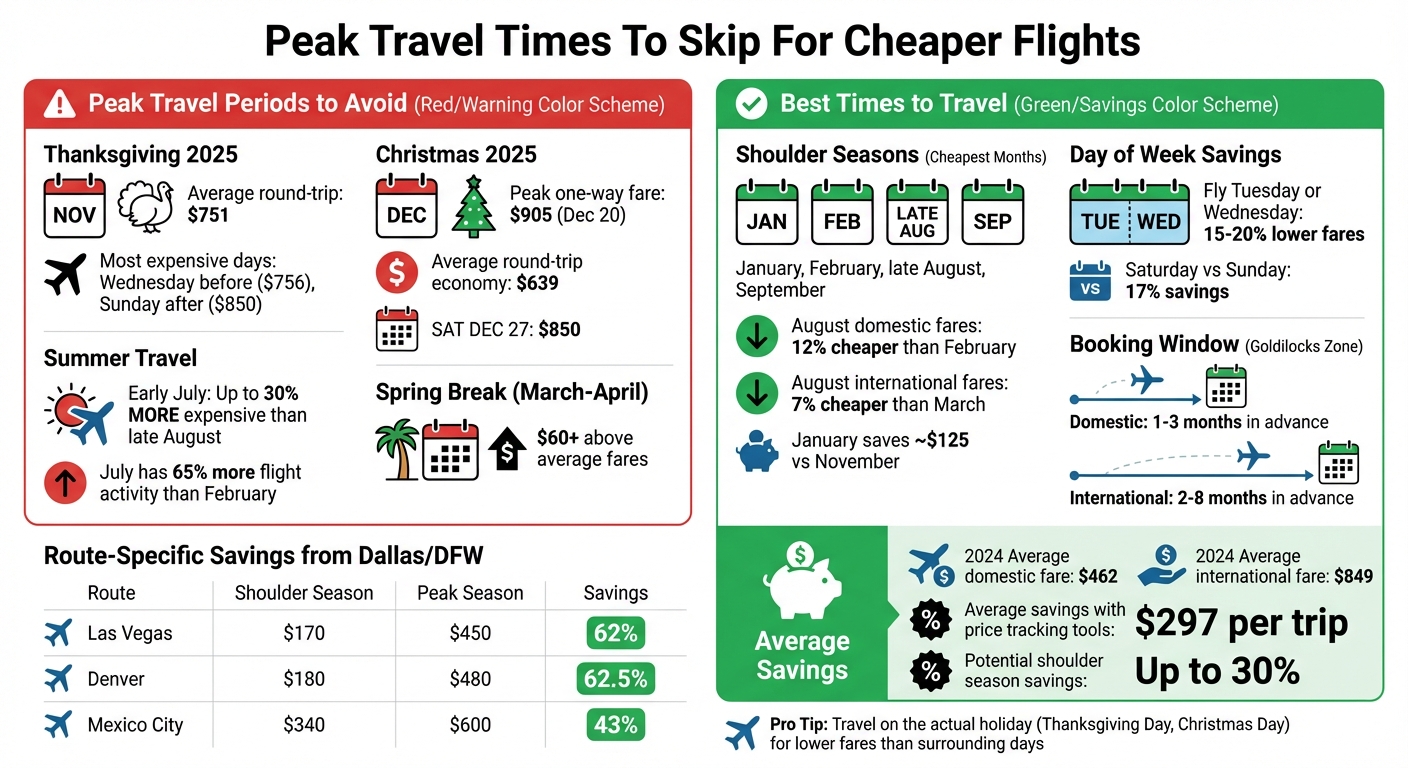
Want to save on flights? Avoid peak travel periods like major holidays, summer vacations, and school breaks. These times see airfare prices skyrocket due to high demand. For instance, domestic tickets during Thanksgiving 2025 averaged $751, with one-way fares peaking at $850. Similarly, early July flights cost up to 30% more than late August.
Key tips to save:
- Fly during shoulder seasons (January, February, late August, September).
- Travel midweek (Tuesday or Wednesday) for up to 20% lower fares.
- Book flights 1–3 months in advance for domestic trips, 2–8 months for international.
Tools like Joe's Flights can help by tracking deals and notifying you of price drops from Dallas airports. Travelers saved an average of $297 per trip in 2024 using such alerts. Plan strategically and avoid peak times for the best deals.
Peak vs Off-Peak Flight Prices: When to Fly for Maximum Savings
Why Flight Prices Increase During Peak Travel Times
Supply and Demand Basics
Airlines operate with a fixed number of seats on their planes, so when demand spikes - like during the holidays - ticket prices tend to soar. Think of it like concert tickets: as the event date nears and seats sell out, prices climb higher.
This pricing strategy is driven by dynamic pricing, where airlines adjust fares in real time based on booking trends and available seats. Last-minute bookings, especially by business travelers, play a big role here. In fact, these travelers contribute to about 75% of airline profits.
For context, in 2024, the average domestic airfare was $462, while international flights averaged $849. But during peak travel times, those prices can skyrocket. For instance, a nonstop flight from JFK to LAX might cost $184 in early December but jump to $480 by December 19 - a staggering 160% increase. Rising operational costs, like fuel and staffing, also push fares higher, and these expenses are passed directly to passengers.
Beyond the basic supply and demand dynamic, seasonal patterns and school schedules further drive up prices during specific periods.
Seasonal Patterns and School Breaks
Seasonal trends play a huge role in airfare hikes. For example, July sees 65% more flight activity than February, making summer the busiest - and priciest - time to travel. In places like Dallas, peak travel season runs from June through August when schools are closed, leaving fewer discounted options for travelers. At Dallas-Fort Worth International Airport (DFW), which handles over 73 million passengers annually, a large chunk of that traffic happens during these summer months.
School breaks are another predictable driver of higher fares. During Spring Break in March and April, domestic tickets can cost $60 or more above average unless you’re flying midweek. Major holidays like Thanksgiving and Christmas also see massive price surges due to limited flexibility for travelers. With fewer available seats, prices shoot up. Interestingly, flying on the actual holiday (like Thanksgiving Day or Christmas Day) often costs much less compared to the days immediately before or after.
Peak Travel Times to Avoid
Major Holidays
The holiday season is notorious for driving up airfare prices to their highest levels of the year. For example, during Thanksgiving in 2025, domestic round-trip fares hit an average of $751 - a 10% jump from the previous year. On peak travel days, one-way fares soared to $756 on Wednesday and $850 on Sunday. Christmas followed a similar trend, with one-way tickets peaking at $905 on the Saturday before the holiday (December 20, 2025) and settling at $850 on December 27. Round-trip economy tickets during this period averaged $639.
"Wait too long to book, and the only thing you'll be unwrapping is holiday stress, not savings." – Katy Nastro, Travel Expert, Going
And it’s not just the holidays. Summer travel brings its own set of challenges when it comes to airfare.
Summer Vacation Period
Summer travel is another wallet-draining season, particularly in early July. Historically, the first week of July is the most expensive time to fly during the summer. Families eager to make the most of their vacation time drive up demand, with July seeing 65% more flight activity compared to February. This surge is especially noticeable at major Dallas airports like DFW and Love Field, where fares tend to climb sharply.
However, waiting until late summer can pay off. According to Laura Lindsay, Global Travel Trends Expert at Skyscanner:
"U.S. travelers can save up to 30 percent on flight tickets by flying in mid-August instead of early July - August 25 is the cheapest week to fly in 2025." – Laura Lindsay, Global Travel Trends Expert, Skyscanner
So, delaying your summer getaway by just a few weeks could lead to significant savings. Outside of summer, school breaks like Spring and Fall Break also contribute to rising airfare costs.
Spring Break and Fall Breaks
School breaks consistently lead to fare hikes, even outside of major holidays. In March, Spring Break demand pushes prices higher, especially for Dallas travelers. Planning around school calendars becomes crucial to avoid these price surges.
October fares also see an uptick as families take advantage of Fall Break. While the increases during this time aren’t as steep as those seen during Thanksgiving or Christmas, the predictable boost in demand makes flights pricier during these school breaks.
Here’s a quick summary of peak travel periods and their associated fare spikes:
| Holiday Period | Most Expensive Days | Peak One-Way Fare |
|---|---|---|
| Thanksgiving | Wednesday before, Sunday after | $756 (Wed), $850 (Sun) |
| Christmas | Saturday before (Dec 20), Saturday after (Dec 27) | $905 (Dec 20), $850 (Dec 27) |
| Summer | First week of July | Up to 30% higher than late August |
Best Times to Travel for Lower Prices
Shoulder Seasons for Cheaper Flights
If you're looking to save on airfare from Dallas, timing is everything. January, February, September, and late August are prime months for snagging lower fares. Airlines typically lower prices during these periods to fill seats after the holiday rush or before the next peak travel season kicks in.
Among these, August is a standout month for affordable travel - both domestic and international - even though it’s summer. Christine Hudson explains that with U.S. kids heading back to school and European travelers already on vacation, demand dips, which helps push prices down in late summer. On average, domestic fares in August are 12% cheaper than February, while international fares drop by 7% compared to March.
Spring (April–May) and fall (September–October) are often referred to as the "sweet spot" for travel. These shoulder seasons bring lower prices, smaller crowds, and still-pleasant weather. For example, flying in January can save you about $125 compared to November. For Dallas travelers, targeting mid-April through May or mid-September through October can mean savings of up to 30% compared to peak travel periods.
These trends hold true across several popular routes from Dallas, making it worth planning your trips around these key months.
Price Comparisons on Popular Routes
Here’s how these seasonal savings play out on some of the most popular routes from Dallas/Fort Worth (DFW):
| Route from DFW | Shoulder Season Price | Average Peak Price | Potential Savings |
|---|---|---|---|
| Las Vegas (LAS) | $170 | $450 | 62% |
| Denver (DEN) | $180 | $480 | 62.5% |
| Mexico City (MEX) | $340 | $600 | 43% |
Beyond choosing the right month, the day of the week you fly can also impact your costs. Flying mid-week - on a Tuesday or Wednesday - can save you an additional 15% to 20% on domestic routes. Even shifting your departure from Sunday to Saturday can reduce costs by 17%.
In 2024, the average domestic ticket price was $462, while international flights averaged $849. However, by traveling during shoulder seasons and making strategic day-of-week choices, you can bring these numbers down even further.
sbb-itb-d0f92e0
What Are The Best Times To Avoid Peak Travel?
Using Flight Deal Alerts from Dallas Airports
Once you've nailed down the best times to book flights, the next step is making sure you don't miss out on those fleeting deals. That's where flight deal alerts come into play, acting as your personal assistant to secure the lowest fares.
How Joe's Flights Works
Searching for flights manually can be a time sink, and fares are notorious for fluctuating - sometimes by as much as 40% - in just a few hours. That's why automated tools like Joe's Flights are a game changer for travelers flying out of Dallas.
Joe's Flights specializes in tracking departures from DFW and Love Field, keeping an eye on fares around the clock to catch price drops, mistake fares, and flash sales. When a deal pops up, you’ll get an alert with all the details: the route, price, travel dates, airline, and even a direct booking link to snag the fare.
The service offers a free plan, which sends you one standout deal per week from Dallas airports, covering both domestic and international flights. For those who want more, the Premium plan costs $59 per year and delivers every deal as it happens, with no restrictions.
Both plans are designed to focus on quality, not quantity. You won’t be bombarded with minor discounts, and unsubscribing is as simple as a single click if your travel plans change.
Upgrading to a Premium alert service could unlock even greater savings, especially for frequent travelers.
Benefits of Premium Alerts
Premium subscribers have a clear advantage when it comes to timing. While free users get one deal per week, Premium members receive daily alerts for every price drop from both Dallas airports. This is especially important because the best deals - like mistake fares or flash sales - can vanish in mere minutes or hours.
On average, travelers using price tracking tools saved $297 per trip in 2024. Keeping tabs on both DFW and Love Field increases your chances of snagging lower fares, often enough to offset the $59 annual fee.
Premium alerts are also perfectly timed to help you catch the "Goldilocks Window" for booking. That’s 1–3 months before departure for domestic flights and 2–8 months for international trips, the sweet spot when the cheapest fares are usually available. Pair this with midweek or off-peak travel strategies, and real-time notifications give you the best chance to lock in those low prices before they disappear.
Conclusion
Understanding when airfare peaks and how to sidestep those periods can make a big difference in your travel budget. Prices tend to climb during major holidays, summer vacations, and school breaks, all driven by the basic principles of supply and demand.
Simple timing tweaks - like flying midweek or during shoulder seasons - can slash costs by as much as 30%. Even small adjustments, such as traveling on Thanksgiving Day instead of the days around it, can lead to noticeable savings.
For travelers departing from Dallas, keeping an eye on deals from both DFW and Love Field can increase your chances of finding a bargain. Tools like Joe's Flights actively monitor fares from both airports and notify you as soon as a deal pops up. With price tracking tools helping travelers save an average of $297 per trip in 2024, the value is undeniable. By combining smart timing with real-time alerts, you can consistently lock in the best fares.
FAQs
When is the best time to book flights for lower prices?
The best time to snag cheap flights in the U.S. is usually August. This month falls in a sweet spot between the hustle of spring break and the peak summer travel season, which often leads to lower fares as airlines try to fill seats. When it comes to timing during the week, Sundays are a smart bet - airlines frequently offer lower prices on this day.
For domestic travel, booking your flight 1–2 months before your trip tends to yield the best prices. If you’re planning an international getaway, aim to book 3–5 months ahead for the best savings. Want to catch even more deals? Keep an eye out on Tuesday afternoons, as airlines often roll out weekly sales during this time.
If you're flying out of Dallas (DFW or Love Field), Joe’s Flights can make bargain hunting easier by sending you real-time alerts whenever prices drop within these ideal booking windows.
Why are flights more expensive during peak travel times?
Airlines rely on dynamic pricing algorithms to set ticket prices, adjusting them based on demand. For instance, during holidays or big events when many people are traveling, demand spikes - and so do ticket prices. On top of that, as more seats on a flight get booked, fares can change rapidly, making last-minute tickets notoriously expensive.
If you're looking to save money, consider steering clear of these high-demand periods. Booking flights during off-peak times can often lead to much lower prices. Plus, planning your trip well in advance and keeping your travel dates flexible can help you snag better deals.
How can flight deal alerts help me save money on airfare?
Flight deal alerts can be a game-changer when it comes to saving money on airfare. These alerts keep you in the loop whenever airlines slash prices or open up low-cost booking opportunities, giving you the chance to grab those discounted tickets before prices climb back up.
Joe’s Flights is dedicated to uncovering affordable flight deals departing from Dallas airports, including DFW and Love Field. They take the guesswork out of finding bargains by tracking fares and sending you real-time alerts, making it easier to secure great savings without spending hours scouring the web.
Related Blog Posts
Written by Joe's Flights. Spotted something cheaper? Tell us.