Ultimate Guide to Dallas Airline Route Networks
Compare DFW and Love Field routes, carriers, and tips to choose between international hub flights or frequent low-cost domestic service.

- Dallas Fort Worth International Airport (DFW):
- Major hub for American Airlines.
- Nonstop flights to over 200 destinations, including 35 long-haul routes exceeding 5,000 miles.
- Ideal for international travel and complex itineraries.
- Dallas Love Field (DAL):
- Southwest Airlines' base, focusing on domestic point-to-point routes.
- Nonstop flights to over 100 U.S. cities.
- Convenient for quick domestic trips and budget-friendly fares.
Key Takeaways:
- DFW is your go-to for global connectivity and premium services.
- Love Field excels for frequent, low-cost domestic flights.
- Compare fares and schedules at both airports for the best deals.
- Tools like Joe's Flights help track real-time fare drops, such as $79 flights to Los Angeles or $440 flights to Rome.
Both airports cater to different travel needs, offering flexibility and savings for Dallas-area travelers.
Dallas Airport Overview
Dallas is home to two major commercial airports, each catering to different travel needs. Understanding the roles of Dallas-Fort Worth (DFW) International Airport and Dallas Love Field can help you pick the best option for your journey and even save money on airfare.
DFW International Airport
DFW International Airport ranks among the busiest in the United States, handling tens of millions of passengers every year. It offers an impressive network of nonstop routes, with over 350 destinations served by American Airlines.
Operating on a hub-and-spoke model, DFW connects smaller U.S. cities to long-haul flights heading to Europe, Asia, and Latin America. The airport’s infrastructure supports ultra-long-haul routes, with dozens of flights exceeding 5,000 miles. For instance, its schedule includes flights to major cities across Europe, Asia, and Oceania.
For international travelers, DFW provides a wealth of options. The airport is equipped with lounges, alliance perks, and premium cabin services, offering frequent-flyer benefits through American Airlines and its partners. Located between Dallas and Fort Worth, DFW is farther from downtown Dallas, requiring about 30–45 minutes of travel by car during non-peak hours.
Dallas Love Field
Dallas Love Field, on the other hand, focuses primarily on domestic flights and is conveniently located closer to downtown Dallas. Southwest Airlines operates a point-to-point model here, providing direct flights to a wide range of U.S. cities. Most routes are under 2,000 miles and are served by narrow-body aircraft. With frequent departures on popular routes, Southwest offers plenty of options for travelers.
The airport’s compact design makes it easy to navigate. Short distances between parking, security, and gates, along with generally quicker security lines, create a more seamless experience compared to larger airports. Historically, Love Field was Dallas’s main airport before DFW opened in the 1970s. Federal regulations, including the Wright Amendment, later limited its long-haul capabilities, shaping its current focus on short-haul domestic travel. This accessibility and efficiency make it a favorite for downtown residents and business travelers.
| Feature | DFW International Airport | Dallas Love Field |
|---|---|---|
| Primary role | Major domestic and international hub | Primarily domestic point-to-point airport |
| Main anchor airline | American Airlines hub and partner services | Southwest Airlines focus airport |
| Route profile | Extensive U.S. network plus long-haul international routes over 5,000 miles | Dense domestic network of short- and medium-haul routes |
| Location relative to city | Between Dallas and Fort Worth, farther from downtown Dallas | Closer to downtown Dallas, ideal for city-center access |
| Typical traveler use case | International trips, complex connections, wide destination choices | Quick domestic trips, especially on Southwest, with easy access |
| Scale and traffic | One of the busiest U.S. airports by passenger volume | Smaller overall traffic compared to DFW |
The two airports serve distinct purposes: DFW excels in international travel and complex itineraries, while Love Field prioritizes efficient domestic routes.
Travelers looking to save money should compare fares and schedules at both airports. For example, a flight to Los Angeles might be cheaper at one airport depending on the airline, competition, and capacity. This clear separation of roles highlights how airlines tailor their strategies to meet the diverse needs of Dallas-area travelers.
Major Airlines and Their Route Strategies
Dallas is home to two major airlines - American Airlines at DFW and Southwest Airlines at Love Field - each with its own approach to meet diverse travel needs. American relies on a hub-and-spoke model at DFW, while Southwest leans on a point-to-point system at Love Field.
American Airlines at DFW
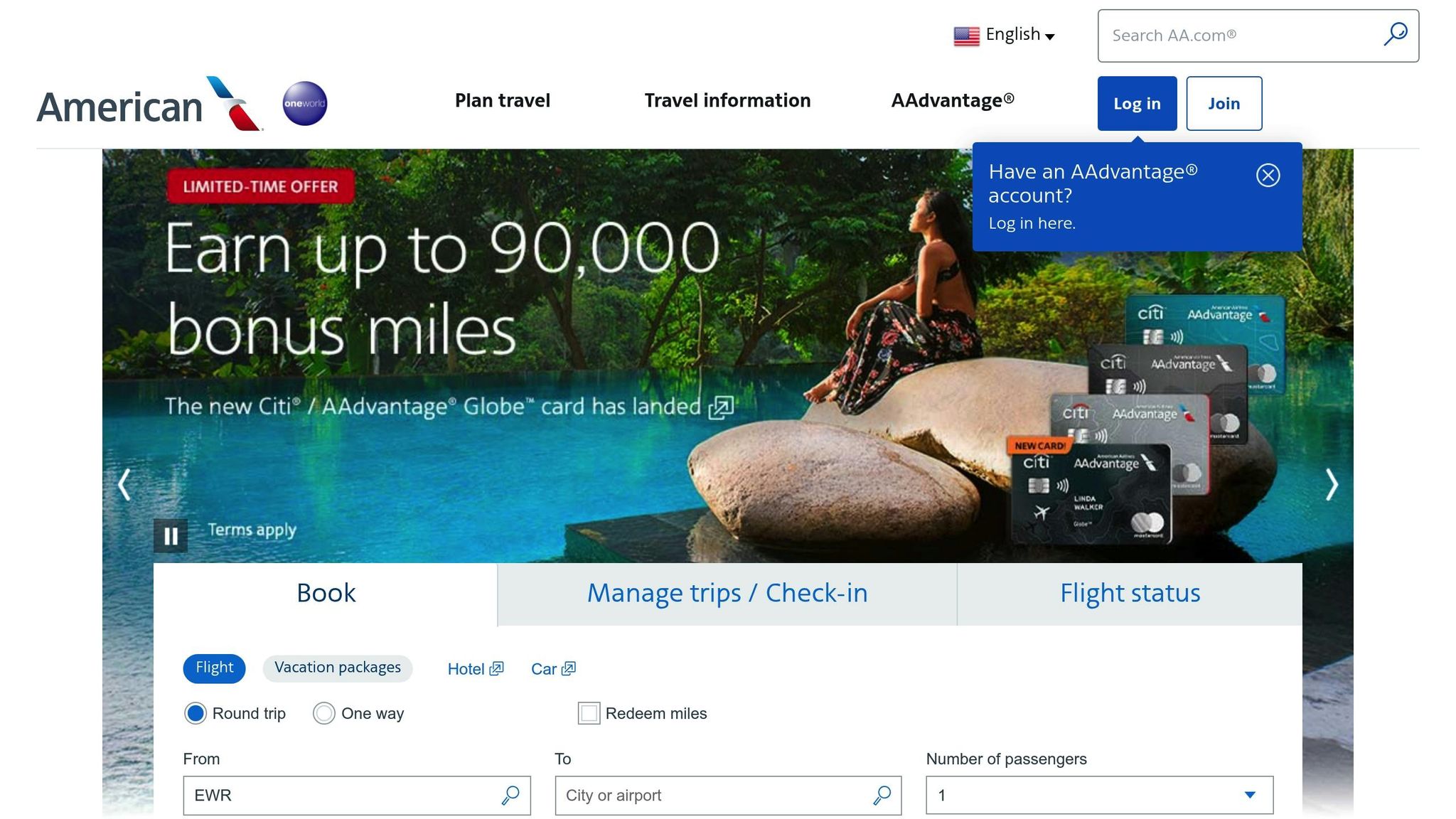
American Airlines operates its largest global hub out of Dallas/Fort Worth International Airport (DFW), managing around 1,800–1,900 daily flights - accounting for 90% of the airport’s traffic. Its hub-and-spoke model connects travelers to over 200 cities, including 35 long-haul routes exceeding 5,000 miles. These flights link Dallas to major global markets in Europe, Asia, and South America. Recent expansions have added nonstop flights to secondary European cities like Athens and Lisbon, alongside frequent service to top destinations such as London, Paris, and Frankfurt.
This model offers extensive connectivity, making it easier for passengers to reach smaller or distant destinations with just one stop. It also supports a tiered fare system, ranging from basic economy to first class, and a loyalty program that rewards frequent flyers. However, the tightly scheduled nature of the hub means that even minor delays can disrupt the network. For business travelers and those planning complex international itineraries, DFW's hub offers unmatched options with multiple daily flights on key routes.
Southwest Airlines at Love Field
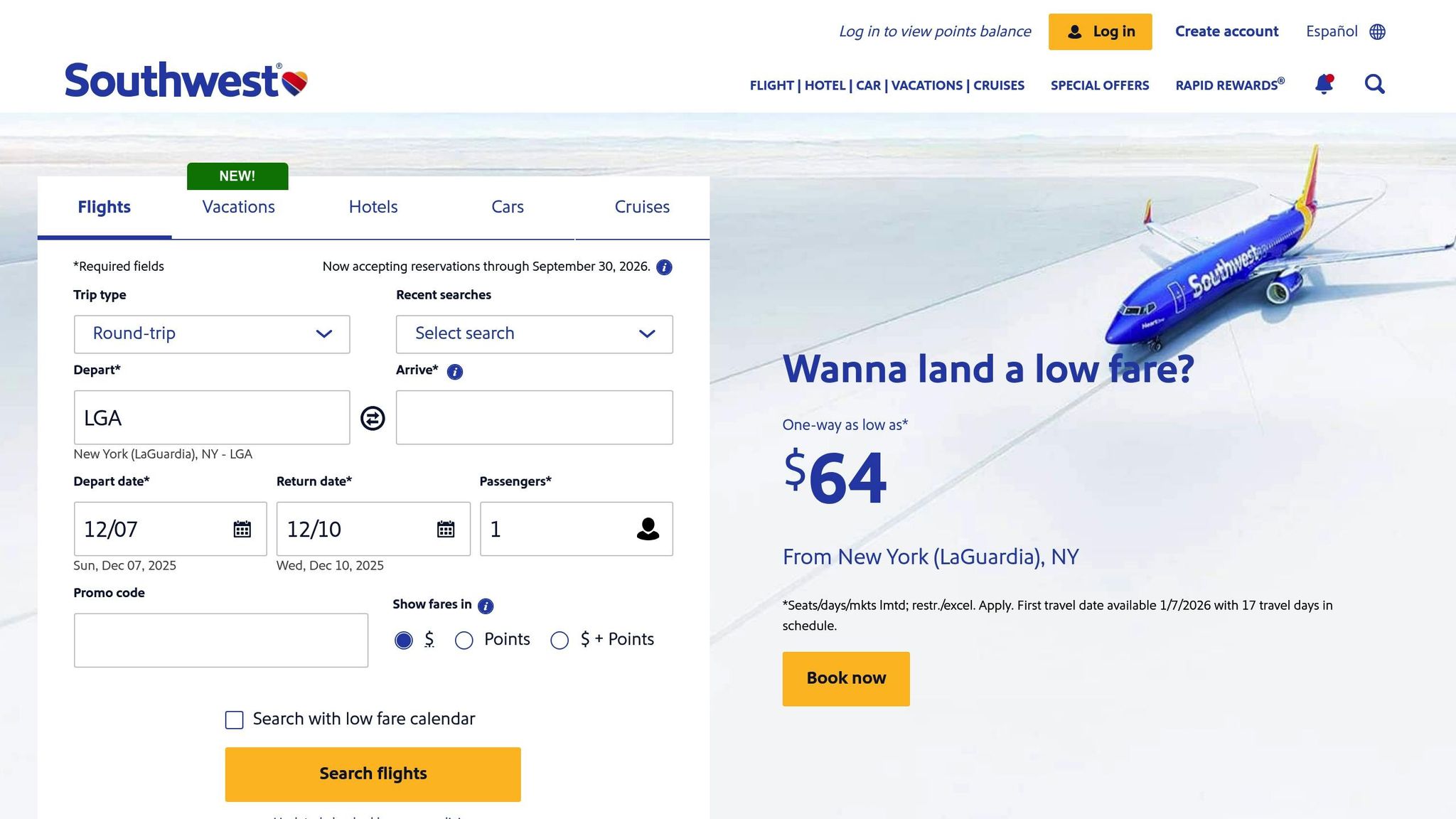
Southwest Airlines takes a different approach at Dallas Love Field, focusing on nonstop domestic flights to over 100 U.S. cities. Operating an all-Boeing 737 fleet, Southwest prioritizes frequent short- to medium-haul flights, giving travelers plenty of options for departure times without the need for connections. Its straightforward pricing, with one-way fares often between $50 and $150, appeals to budget-conscious travelers. Southwest’s loyalty program keeps things simple, offering free checked bags, no change fees, and a points-based system that rewards frequent travel.
While Southwest minimizes the risks of missed connections with its nonstop service, its network is less suited for smaller markets or long-haul international travel. On competitive routes like Dallas to Los Angeles, New York, or Denver, American offers more premium cabin options and global connectivity, while Southwest focuses on affordability and frequent departures. Both airlines adjust their schedules seasonally - American expanding its long-haul and international routes during peak travel periods, and Southwest adding flights to popular leisure destinations on weekends or holidays.
| Carrier | Network Model | Primary Focus | Daily Departures | Typical Routes | Loyalty Benefits |
|---|---|---|---|---|---|
| American Airlines | Hub-and-spoke | Domestic, transcontinental, international | 1,800–1,900 from DFW | Over 350 global destinations | Elite status, upgrades, alliance perks |
| Southwest Airlines | Point-to-point | High-frequency domestic nonstops | Multiple daily flights on 100+ U.S. routes | U.S. cities | Simple points system, free bags, no change fees |
For travelers in the Dallas area, the choice often boils down to priorities. If you’re looking for global connectivity and premium service, American Airlines at DFW is the go-to option. For flexibility and cost-effective domestic travel, Southwest Airlines from Love Field is hard to beat. Using tools like Joe's Flights () can further help you find the best deals from either carrier. Up next, we’ll explore how these strategies shape their domestic and international networks, offering more insights for smarter travel planning.
Domestic and International Route Patterns
Domestic Route Network
Dallas offers a robust domestic flight network, anchored by two key airports: Dallas/Fort Worth International Airport (DFW) and Dallas Love Field. At DFW, the hub-and-spoke model connects smaller communities to major metropolitan areas like New York, Los Angeles, Chicago, Miami, and Denver. This setup caters to a mix of corporate and leisure travelers, ensuring convenient access to top destinations.
Meanwhile, Dallas Love Field - dominated by Southwest Airlines - focuses on nonstop flights to cities such as Houston, Austin, Denver, Las Vegas, and Orlando. These routes are popular among budget-conscious passengers and short-haul business travelers seeking efficiency and affordability.
DFW also supports regional connections, linking smaller towns across Texas and neighboring states to its extensive national network. This seamless integration with DFW's international flights strengthens global accessibility. Seasonal adjustments are common, with airlines adding more flights to sunny destinations during winter and mountain resort areas in the summer. For lower fares, consider booking midweek flights and keeping an eye on schedule changes.
International Route Growth
While domestic routes meet regional travel demands, Dallas's international services highlight its growing role as a global travel hub.
Over the past decade, international routes from Dallas have expanded significantly, driven by strong business ties, increasing tourism, and the needs of diaspora communities. This growth spans three major regions: transatlantic, transpacific, and Latin America. For example, transatlantic routes now offer competitive options like flights to Rome, with fares starting as low as $440 in December 2025.
Transpacific routes connect Dallas to major Asian cities, supporting global trade and business by integrating with domestic feeder flights. Similarly, Latin American routes have grown to meet the demands of both leisure travelers and those visiting family abroad. Airlines frequently adjust schedules and flight frequencies to accommodate seasonal demand peaks.
Many domestic flights into DFW are timed to align with international departures, offering connection windows of 1.5 to 3 hours. When planning, allow extra time for customs if you're transitioning from an international flight to a domestic one.
Airlines regularly tweak their strategies by adding new routes, increasing flight frequencies, or adjusting capacity. These changes often present opportunities for budget travelers, reflecting the dynamic and evolving nature of Dallas's aviation market.
sbb-itb-d0f92e0
How to Use Route Networks for Better Travel
Making the most of Dallas's airline route networks goes beyond simply knowing where planes fly. It's about using that information to make smarter decisions, save money, and plan your travel efficiently. By understanding which airlines connect specific destinations from DFW and Love Field, you can strategically find better fares and streamline your journey.
Tools for Tracking Routes and Prices
A good place to start is with airline route maps. For instance, American Airlines' "Where we fly" page outlines all destinations accessible from DFW, whether nonstop or with connections. Similarly, Southwest Airlines provides a detailed route list for Love Field. These maps help you pinpoint all available destinations from Dallas and narrow down your options based on dates and fares.
For real-time tracking, tools like Flightradar24 are invaluable. Their DFW route view displays all scheduled nonstop flights for the coming week, giving you a clear picture of available routes. This is especially helpful for identifying seasonal or infrequent flights, as relying on a route that only operates occasionally can disrupt your plans.
Another essential tool for Dallas travelers is Joe's Flights (). This service monitors fares from both DFW and Love Field, sending real-time alerts when significant price drops occur. With fare alerts in place, you can quickly act on limited-time deals and secure the best prices.
DFW's extensive network also opens up unique opportunities. A Cirium analysis revealed that DFW connects to 22 international destinations via 35 routes over 5,000 miles. Sometimes, booking a separate flight to DFW and then catching a discounted long-haul flight can be more economical than booking a single ticket from a smaller airport with fewer options.
By combining route tracking with fare monitoring, you can effectively plan around seasonal changes and take advantage of the most favorable travel windows.
Planning Around Seasonal Route Changes
Seasonal route changes play a big role in airfare fluctuations. Airlines often adjust their schedules based on demand, with many leisure destinations - like beach towns or ski resorts - receiving service only during peak travel periods. Regional carriers such as SkyWest mark these routes as seasonal on their maps, with updates provided regularly.
If you're planning a trip to a seasonal destination, it's crucial to confirm your travel dates fall within the active service period. Checking route maps in advance ensures you avoid issues like limited options, higher fares, or no direct flights. Additionally, some seasonal routes may only operate on select days, so verifying your preferred travel dates aligns with the schedule is essential.
Spring and fall often bring more route options and lower fares. When new routes from Dallas are announced, airlines might offer promotional fares, but these prices may not last long. Researching historical prices for similar routes can help you determine whether a deal is genuinely worthwhile or just a short-term offer. Keeping track of fares on routes you frequently travel can also give you a better sense of what constitutes a good deal.
Dallas's dual-airport system is another advantage worth leveraging. DFW, as a major hub for American Airlines, offers extensive domestic and international connections, while Love Field, dominated by Southwest, focuses on point-to-point domestic routes. Seasonal changes can affect one airport differently than the other, so checking schedules for both can reveal unique fare opportunities. Since airline route maps are updated monthly, reviewing them closer to your travel date can help you avoid surprises like last-minute schedule changes or cancellations.
Conclusion
Dallas stands out for its exceptional air travel options. With DFW International Airport serving as a major hub for American Airlines and Dallas Love Field anchoring Southwest Airlines' vast domestic network, travelers have access to hundreds of domestic routes and connections to over 20 international destinations.
Knowing how these airports operate can help you save money and plan smarter. DFW is ideal for long-haul international flights and one-stop itineraries, while Love Field shines with frequent, competitive domestic point-to-point flights. Comparing fares and schedules between the two can reveal surprising differences in cost and convenience.
Start by exploring airline route maps from American Airlines and Southwest Airlines to visualize your nonstop and one-stop options. Check both airports for your desired destinations, as prices and schedules can vary even on similar routes. Keep an eye on seasonal trends - airlines often introduce new routes or add flights during peak seasons, sometimes with promotional pricing. Off-peak travel periods can also bring unexpected deals as airlines adjust their flight capacity.
To stay ahead of these changes, real-time fare alerts are a game-changer. Tools like Joe's Flights () monitor prices at both DFW and Love Field, sending instant notifications when fares drop significantly. Airlines frequently introduce new routes or offer temporary discounts, and these deals can disappear within hours, making quick action essential.
Identify your preferred destinations, study route maps, and set up fare alerts to make the most of Dallas's extensive air connectivity. With two well-connected airports, competitive airlines, and growing international options, you can turn Dallas into a gateway to efficient and budget-friendly travel. All it takes is the right strategy and tools to make these opportunities work for you.
FAQs
Which Dallas airport should I choose: Dallas/Fort Worth International (DFW) or Dallas Love Field (DAL)?
When deciding between Dallas/Fort Worth International Airport (DFW) and Dallas Love Field (DAL), it often comes down to your travel needs and preferences. DFW, being the larger of the two, serves as a major hub for American Airlines and offers a wide range of domestic and international flights. On the other hand, Love Field is smaller, easier to navigate, and primarily caters to Southwest Airlines with domestic routes.
For budget-conscious travelers, it’s a good idea to compare flight prices and availability at both airports, as they can differ. Also, consider practical factors like how close each airport is to you, parking options, and flight schedules to pick the one that suits your trip best.
How can I find the best flight deals from Dallas airports?
For those departing from Dallas, Joe's Flights offers an excellent way to snag the best airfare deals. Focused exclusively on flights from Dallas airports - DFW and Love Field - it keeps an eye on prices and sends real-time alerts whenever there’s a major drop.
This means you can skip the endless searching and still grab those budget-friendly flights, thanks to timely updates and essential booking details delivered straight to you.
How do seasonal airline route changes affect airfare and travel planning from Dallas?
Seasonal route adjustments have a noticeable impact on airfare prices and travel planning. Airlines regularly tweak their schedules to match demand, increasing flights to popular destinations during peak seasons and scaling back during quieter periods. These shifts often lead to ticket prices rising or falling, so planning ahead and staying adaptable is key.
For those traveling on a budget, paying attention to these seasonal changes can uncover excellent savings opportunities. Watching fare patterns and booking when demand is lower can result in significant discounts. Plus, using tools that track and notify you about price drops from Dallas airports can make finding those deals even simpler.
Related Blog Posts
Written by Joe's Flights. Spotted something cheaper? Tell us.