Ultimate Guide to Real-Time Flight Tracking
Real-time flight tracking tools show your plane's position, predict delays, and send gate and weather alerts to simplify travel from Dallas airports.
Want to simplify your travel experience? Real-time flight tracking apps can help you stay informed about flight delays, gate changes, and arrival times - whether you're flying out of Dallas-Fort Worth International (DFW) or Love Field. With flight activity at DFW up 7% compared to last year, these tools are essential for stress-free travel.
Key Takeaways:
- Track flights in real-time: Apps like FlightAware and Flightradar24 provide updates often faster than airport monitors.
- Plan around weather: Tools include radar overlays to monitor North Texas storms, which frequently impact flights.
- Monitor your plane: Features like "Where is my Plane?" let you track your assigned aircraft before it arrives.
- Navigate airports easily: Get gate info, terminal changes, and even airport maps for smoother connections.
Top Apps for Dallas Travelers:
- Flightradar24: Live flight maps, AR mode, and 3D pilot view.
- FlightAware: Advanced ETA predictions and weather overlays.
- Flighty: Predict delays up to six hours in advance and track your plane 25 hours before departure.
Pair these apps with fare alert services like Joe's Flights to save money on airfare and manage your travel plans efficiently. Turn on notifications, sync your flight details, and enjoy a more organized travel experience.
How to Use Flight Aware to Check Your Flight & More
How Real-Time Flight Tracking Works
Flight tracking apps gather data from various sources to provide accurate, real-time updates. At the heart of this system is ADS-B (Automatic Dependent Surveillance-Broadcast). This technology allows aircraft to use GPS to determine their position and broadcast critical data - like altitude, speed, and heading - to receivers on the ground or in satellites. As Ian Petchenik, Director of Communications at Flightradar24, explains:
"Automatic means there is no input required on the part of the flight crew for the system to work. Dependent means the system is dependent on satellite navigation (GPS) to acquire position information."
FlightAware processes an astounding 80,000 messages per second, but it's worth noting that only about 70% of airliners are equipped with ADS-B transponders. For aircraft without this technology, trackers rely on MLAT (Multilateration). This method calculates an aircraft’s position by measuring the time it takes for signals to reach three or more ground receivers.
In addition to aircraft broadcasts, tracking systems pull data directly from airlines. This includes gate-to-gate updates, known as "OOOI" data (Out, Off, On, In), which tracks when a plane leaves the gate, takes off, lands, and arrives at its destination gate. This data is why some apps can provide more precise arrival times. FlightAware, for instance, receives radar and flight plan data from air navigation providers in 45 countries, while Flightradar24 operates a network of over 50,000 ground-based ADS-B receivers.
Main Components of Flight Tracking Systems
The effectiveness of flight tracking depends heavily on receiver coverage. Ground-based ADS-B receivers typically have a line-of-sight range of 150–250 miles (250–450 km). While this works well over land, it creates gaps in coverage over oceans and remote areas. To address this, satellite-based ADS-B receivers provide global coverage, filling in those gaps.
Different apps compile data from a mix of sources, which can lead to slight variations in the information they display. For instance, when an aircraft moves out of terrestrial coverage - such as during a transatlantic flight - apps use algorithms to estimate its position. Flightradar24 can estimate a plane’s location for up to 4 hours based on its last known trajectory and destination.
The frequency of updates also varies by platform. Some apps refresh data every one to four minutes, while others provide faster updates for premium users. However, even the most advanced platforms experience slight delays. Map positions are typically lagged by 1–2 minutes, and most data is delayed by about 30 seconds from real time.
Common Flight Tracking Challenges
Despite their sophistication, flight tracking systems face several challenges. One major issue is coverage gaps. Ground-based receivers have range limitations due to the Earth’s curvature, meaning aircraft flying at lower altitudes or over remote areas may temporarily disappear from tracking. For example, flights over the Atlantic often experience coverage gaps unless satellite data is available.
MLAT tracking also has its limitations. It requires signals to reach at least three or four receivers at the same time. In areas with sparse receiver networks - like rural West Texas - older aircraft without ADS-B transponders may vanish from tracking until they fly into regions with better coverage.
Another challenge arises when flights are labeled as "position-only." This happens when an ADS-B signal is received but cannot be matched to a flight plan. These flights appear without a destination or flight number until the system successfully links the signal to a flight plan. Privacy blocking adds further complexity, as some aircraft owners request their planes be hidden from public tracking. Different apps process these requests at varying speeds.
Finally, when comparing flight tracking apps, it’s important to note whether the time displayed refers to "Landed" (when the wheels touch down) or "Gate Arrival." The difference between the two can be as much as 15 minutes, which is usually the taxi time from the runway to the gate.
Best Flight Tracking Apps for Dallas Travelers
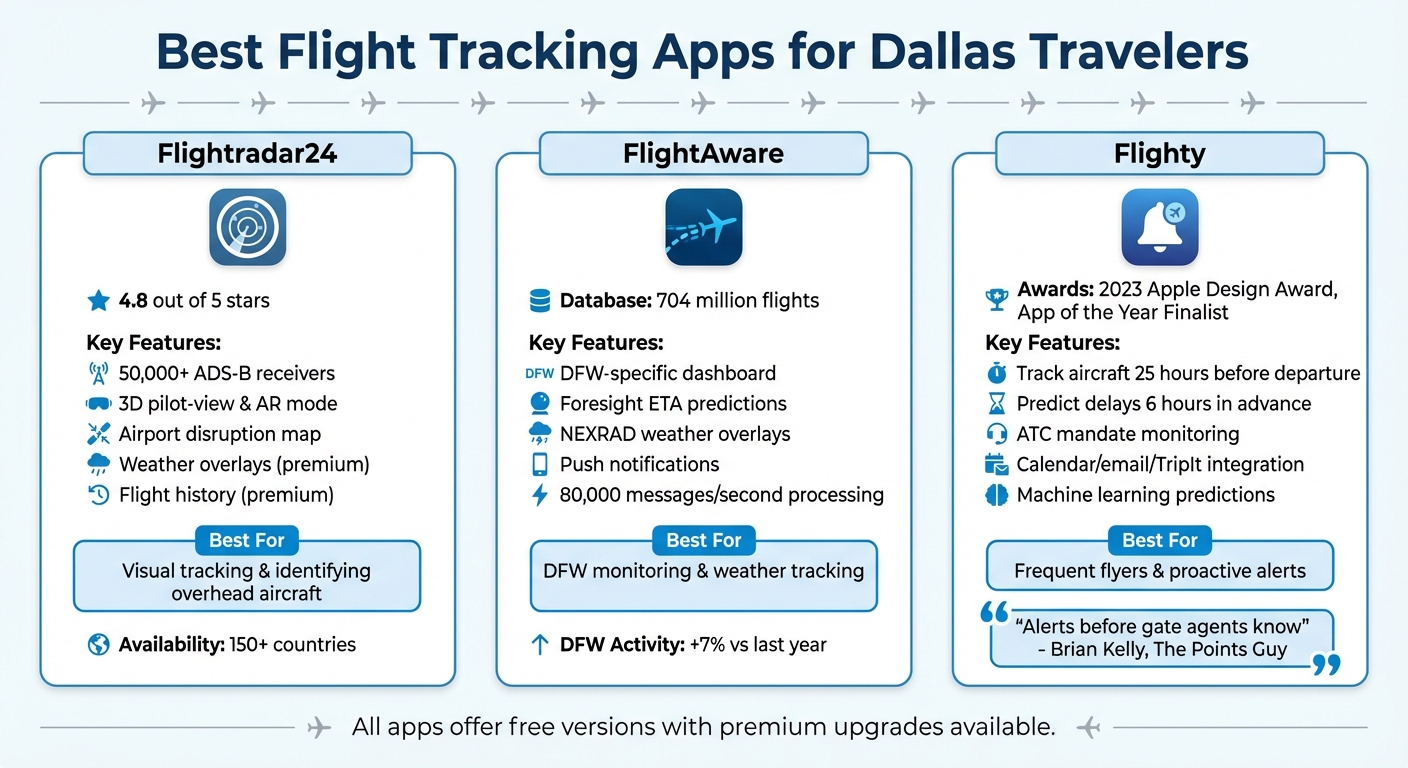
Top 3 Flight Tracking Apps for Dallas Travelers Comparison
Flying out of DFW or Love Field? The right flight tracking app can make your travel experience smoother. Here are three top-notch apps that provide reliable, real-time updates - perfect for Dallas travelers looking for essential features without the need for premium subscriptions.
Flightradar24
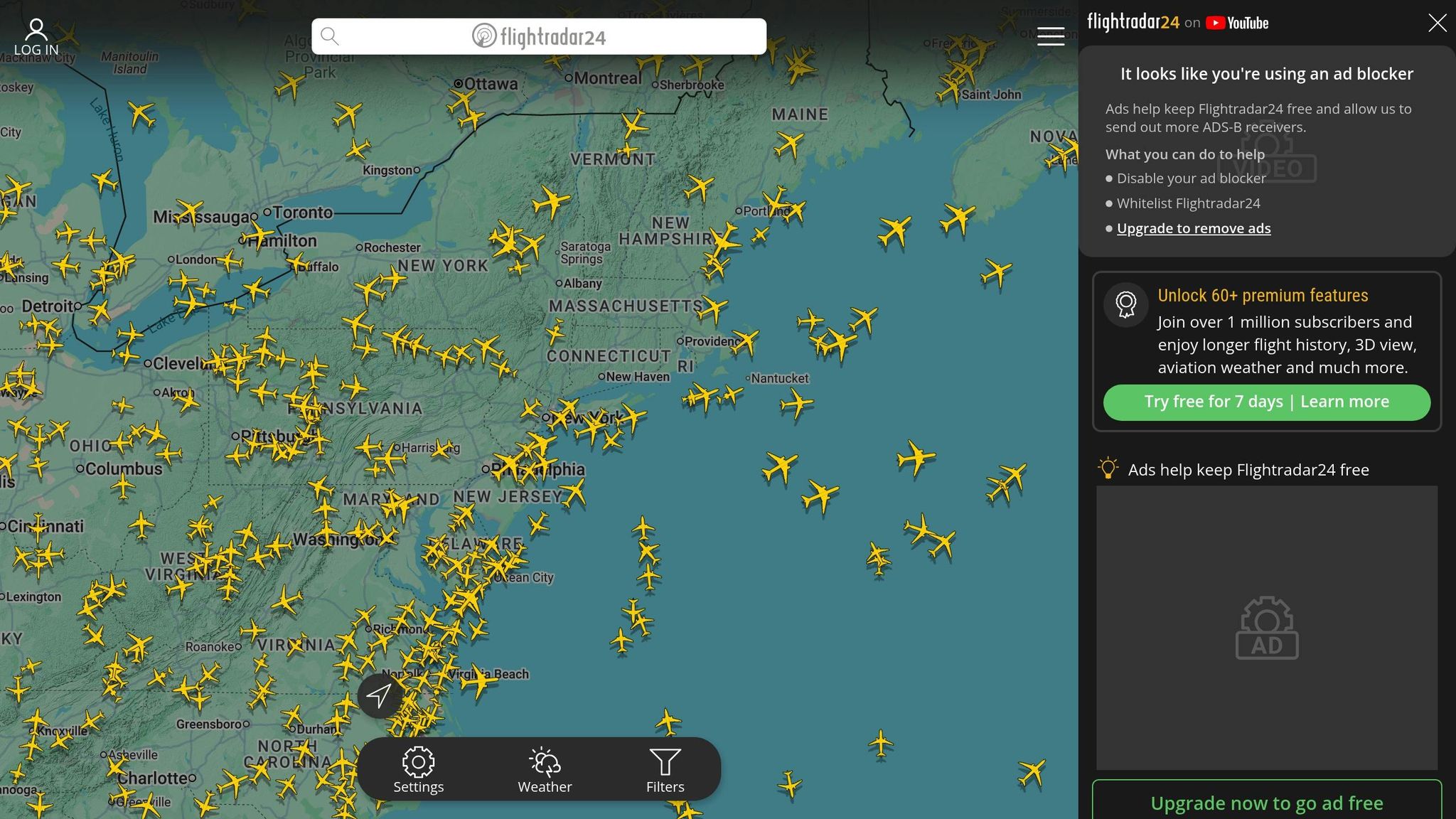
Flightradar24 stands out with its impressive technology, using over 50,000 ADS-B receivers to provide a live flight map. One unique feature is the 3D pilot-view and AR mode, which allows you to identify aircraft overhead, showing their origins, destinations, and other flight details in real time - perfect for a visit to DFW's Founders' Plaza. The app also includes an airport disruption map, giving you a quick overview of delays or cancellations so you can plan ahead.
Highly rated at 4.8 out of 5 stars, Flightradar24 is a favorite for travelers in over 150 countries. While the free version includes ads, upgrading to the Silver or Gold subscription unlocks perks like a year’s worth of flight history and advanced weather overlays.
FlightAware
FlightAware is a great choice for monitoring flight activity specific to DFW. It offers a dedicated dashboard with real-time updates on arrivals, departures, and gate changes. For example, as of January 18, 2026, flight activity at DFW had increased by 7% compared to the same week in 2024, with just four cancellations reported in the last 24 hours.
The app’s "Foresight" technology takes ETA predictions to the next level by combining historical flight data with current conditions, while NEXRAD weather overlays help track those unpredictable North Texas thunderstorms. Push notifications ensure you’re always in the loop, whether it’s a gate change or a delay. Backed by a database containing over 704 million flights, FlightAware is a reliable tool for keeping tabs on your journey.
Flighty
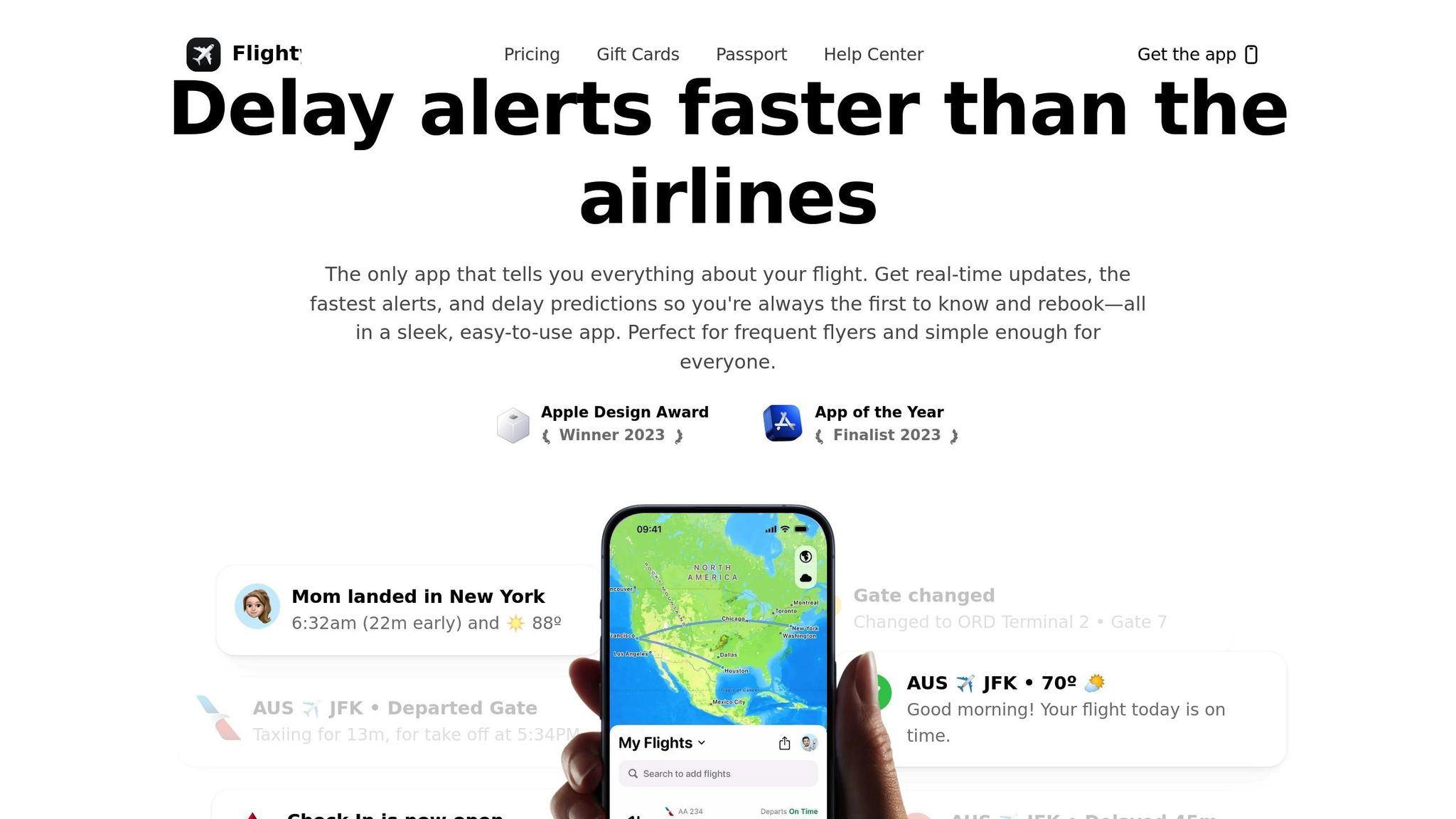
Frequent flyers will appreciate Flighty’s proactive approach. The app tracks your assigned aircraft 25 hours before departure, allowing you to monitor its progress even before it starts its previous flight. This feature is especially helpful when delays are caused by late arrivals, giving you extra time to adjust your plans if needed.
Flighty also uses machine learning to predict delays up to six hours in advance and monitors Air Traffic Control (ATC) mandates, which are a major cause of disruptions. These alerts can help you stay one step ahead of any issues at busy Dallas airports. As Brian Kelly, founder of The Points Guy, puts it:
"Flighty alerts me before the gate agents even know of a change. I love it so much that I've paid for my team to get subscriptions".
Awarded the 2023 Apple Design Award and named a 2023 App of the Year Finalist, Flighty integrates seamlessly with your calendar, email, and TripIt to automatically pull in flight details. While the free version covers basic tracking, the Pro subscription offers advanced features like predictive alerts and historical flight logs, all for a cost described as "less than a dinner out".
What to Look for in a Flight Tracker
Choosing the right flight tracker can make all the difference when navigating Dallas airports or juggling tight connections. Not all apps are built the same, but the best ones come with features that simplify your travel and provide real-time, actionable data. These tools don’t just track flights - they help streamline your entire journey.
Real-Time Updates and Notifications
Push notifications are a must-have for any flight tracker. Instant alerts about gate changes, terminal updates, or departure delays can save you from unnecessary stress. The best apps go a step further by offering notifications through various channels like push alerts, text messages, and emails, ensuring you're always in the loop.
For Dallas travelers, the "Where is my Plane?" feature is a game-changer. This tool tracks the aircraft assigned to your flight even before it reaches the gate. As FlightAware explains:
"If the gate information says your flight is departing in 45 minutes, but you see on FlightAware that the jet is still a half hour away from landing, this can help you plan accordingly".
Since late-arriving planes are the leading cause of flight delays, this feature can provide a heads-up before the airline officially announces any issues.
Weather overlays, like NEXRAD radar, are another essential tool, especially for navigating unpredictable North Texas thunderstorms that often lead to ground stops. Some apps also differentiate between gate time (when the plane pulls up to the gate) and runway time (actual landing or takeoff). This distinction is crucial at larger airports where taxi times can significantly impact your schedule.
Integration with Other Tools
A flight tracker that integrates with your existing tools can make travel planning much smoother. The best apps sync with platforms like Apple Calendar, email, and TripIt, automatically importing your flight details. This eliminates the hassle of manual data entry and ensures your travel schedule stays up-to-date without extra effort.
Look for apps that provide more than just flight status updates. Features like Air Traffic Control (ATC) advisories and delay statistics for specific airports can give you insight into why delays are happening. For instance, weather-related ground stops or ATC mandates are common culprits and knowing the cause can help you adjust your plans accordingly.
At a sprawling airport like DFW, airport maps and gate information are invaluable. Navigating between terminals using the Skylink connector can be tricky, but real-time updates on gate assignments and baggage claim locations can make the process smoother. FlightAware, for example, offers tracking data that's delayed by only 30 seconds from real-time, with map positions lagging by just one to two minutes. This level of accuracy allows you to make informed decisions quickly while on the move.
sbb-itb-d0f92e0
Using Flight Tracking with Other Travel Tools
Dallas travelers who want a smoother travel experience often pair real-time flight tracking apps with fare alert services like Joe's Flights. This combination not only helps you snag great deals but also keeps your travel-day logistics on point. It’s the perfect way to connect fare discovery with real-time updates.
Joe's Flights: Real-Time Fare Alerts for Dallas Travelers
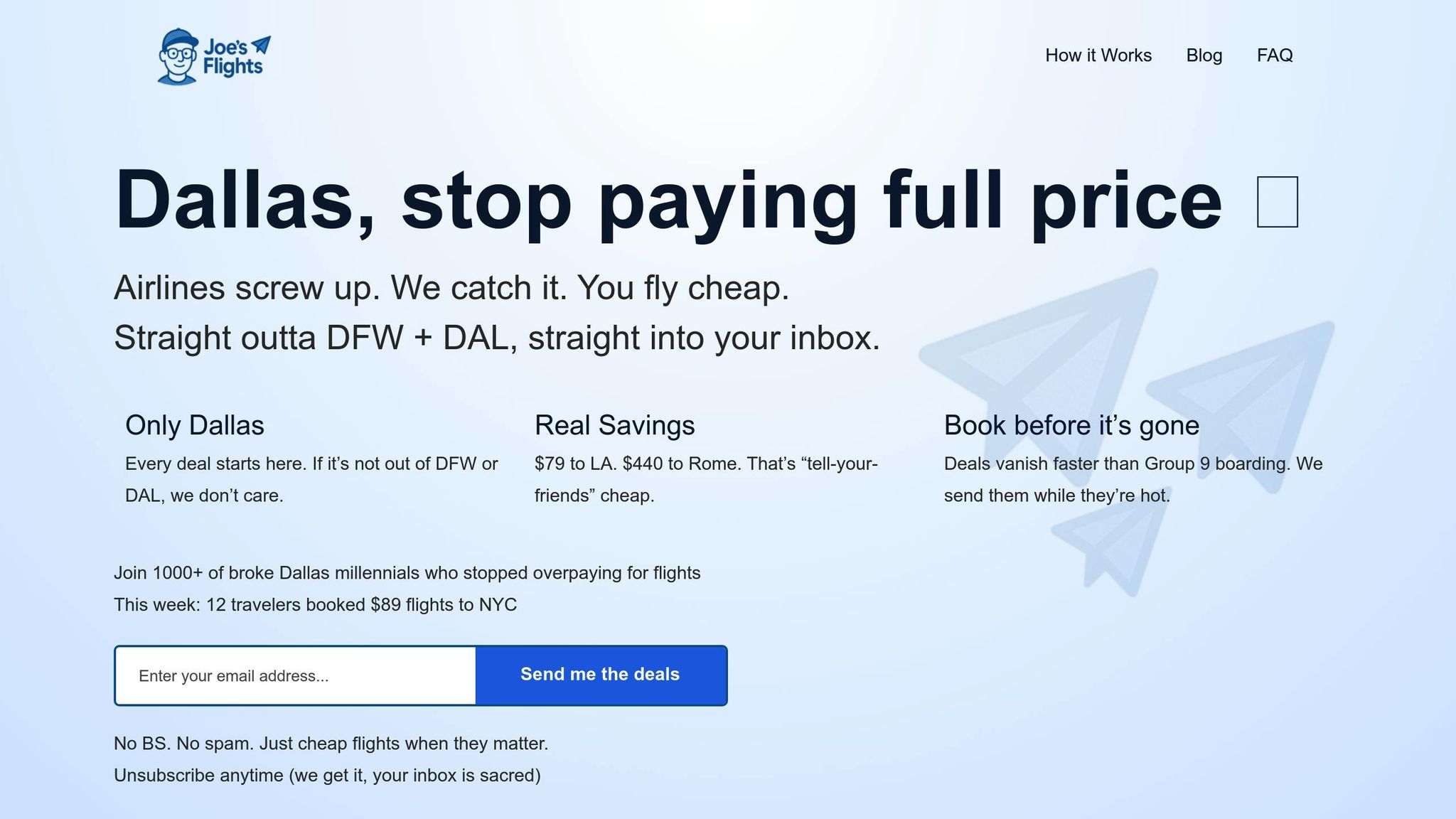
Step one? Book your flight. Joe's Flights specializes in monitoring airfare for Dallas airports - DFW and Love Field - spotting price drops, mistake fares, and flash sales that disappear fast. By focusing solely on Dallas, it avoids the clutter of nationwide alerts, making it a go-to for local travelers.
"We watch Dallas flights so you don't have to. DFW and Love Field, all day. When prices dip, you hear about it first." – Joe's Flights
Imagine scoring a $79 flight to Los Angeles or a $440 ticket to Rome. With Joe's Flights, you’ll know about these deals as soon as they pop up. Their free plan gets you one exclusive deal per week, while the Premium plan, priced at $59 per year, offers unlimited alerts delivered instantly.
"Timing beats tinkering. You can tweak dates for hours, or you can get pinged when the fare drops and book swiftly." – Joe's Flights
Combining Flight Tracking with Fare Alerts
After locking in a great fare through Joe's Flights, real-time flight tracking apps become your best friend. Enter your flight number into a tracking app, and you'll get live updates on gate changes, terminal switches, and delays. Features like "Where is my plane?" are game-changers - if your incoming aircraft is delayed, you’ll know immediately and can adjust your plans accordingly.
This strategy not only simplifies travel-day chaos but also helps you make smarter decisions for future trips. For instance, if you notice recurring delays on a route booked via Joe's Flights, you might decide to choose an earlier flight next time. Tools like FlightAware, with its database of over 700 million flights, provide the historical data you need to spot these trends.
Tips for Getting the Most from Flight Tracking
Set Up Alerts Strategically
When it comes to alerts, focus on the ones that matter most - like gate changes, departure updates, and inbound flight statuses. You can choose how you want to receive these notifications: push notifications, text messages, or emails. Tailor them to specific moments, such as estimated departure times, takeoff, airport arrival, or terminal changes.
The "Where is my Plane?" feature is especially handy for travelers flying out of Dallas. It allows you to confirm key updates, sometimes even before the airline makes an official announcement. Also, FlightAware supplies more than half of the estimated arrival times shown on airport flight boards, offering you reliable, airline-grade data.
Use Filters to Customize Results
Flight tracking apps can feel overwhelming, especially at busy airports like DFW. Filters help cut through the noise. Narrow down results by airport, aircraft type, or flights that are delayed or diverted. For example, if you're picking someone up at Love Field, you can filter for arrivals specific to that airport rather than scrolling through a long list of unrelated flights.
Weather overlays are another useful tool. With NEXRAD radar, you can track precipitation and storm activity along your flight's route. Spotting a storm brewing between Dallas and your destination might give you an early heads-up about delays - even before the airline notifies you. Some apps also let you tweak how long they estimate an aircraft’s position after it leaves radar coverage - up to 4 hours if the destination is known.
These filters and overlays make it easier to incorporate flight data into your travel plans without unnecessary hassle.
Integrate Flight Trackers with Your Travel Plans
Save time by forwarding your flight confirmation emails directly to your tracking app. This automatically adds your flights to the app, eliminating the need to manually input flight numbers - a big help if you’re booking deals through services like Joe’s Flights.
Creating a free account on your tracking app has its perks too. It syncs alerts across your devices - whether it’s your phone, tablet, or computer. If you’re a frequent Dallas traveler, this feature can be a game-changer. By saving your flight history, you can identify trends, such as consistent delays on specific routes, and adjust your future bookings. For instance, you might decide to book an earlier flight to avoid recurring issues.
Conclusion
Real-time flight tracking is a game-changer for travelers flying out of DFW and Love Field. With instant updates on gate changes, delays, and even weather conditions, you can plan your trip with more confidence. Apps like FlightAware, Flightradar24, and Flighty give you access to critical updates - sometimes even before the airlines make announcements - helping you navigate disruptions with ease.
Pairing this tracking technology with real-time fare alerts takes your travel planning to the next level. For instance, Joe's Flights keeps an eye on fares from Dallas airports, notifying you of price drops or flash sales. Once you've booked, flight trackers step in to manage the logistics, ensuring a smoother travel experience.
To make the most of these tools, download a flight tracking app and turn on push notifications. Sync your flights by forwarding confirmation emails, and customize alerts for updates like gate changes, departure times, or inbound aircraft status. If you're a frequent traveler, consider subscribing to Joe's Flights for exclusive fare alerts that can save you both time and money.
FAQs
How can real-time flight tracking make my travel easier?
Real-time flight tracking eliminates the uncertainty of travel by delivering up-to-the-minute updates on your flight’s status. You can monitor your plane’s exact location, get updated departure and arrival times, stay informed about gate changes, and even anticipate weather-related delays. This means you can plan your journey with confidence, minimize stress, and stay in the loop every step of the way.
For those flying out of Dallas, whether from DFW or Love Field, tracking flights means you’ll know about delays or cancellations the moment they happen. This makes it easier to adjust your schedule or coordinate pickups without hassle. Services like Joe’s Flights take it a step further by sending instant alerts for cheap fares from Dallas airports, so you can save money without the constant effort of price-checking.
By offering real-time updates, flight tracking ensures better time management, fewer missed connections, and a smoother, more predictable travel experience overall.
What’s the difference between ADS-B and MLAT flight tracking technologies?
ADS-B and MLAT are two important technologies used to track flights in real time, but they work in distinct ways. ADS-B (Automatic Dependent Surveillance–Broadcast) relies on the aircraft's transponder to send out its GPS-determined location, altitude, and other flight details. Ground receivers then pick up this broadcast, allowing for highly accurate and nearly instant tracking - provided the aircraft is equipped with an ADS-B-out transponder.
On the other hand, MLAT (Multilateration) is used to track planes that lack ADS-B technology. It operates by receiving signals from the plane's transponder at four or more ground stations. The system calculates the aircraft's position based on how long it takes for the signals to reach each station. While effective, MLAT requires multiple receivers within line-of-sight and produces slightly less precise tracking with a short delay, typically around 4 to 6 seconds.
In short, ADS-B delivers quicker and more precise tracking for equipped aircraft, whereas MLAT provides a backup option for non-ADS-B planes, though it comes with some limitations in coverage and timing.
How can flight tracking apps help me manage delays and schedule changes?
Flight tracking apps are an excellent tool for staying informed about delays, cancellations, and gate changes as they happen. They allow you to adapt your travel plans quickly and with less hassle. By turning on push notifications, you can get instant updates on schedule changes, gate switches, or even weather-related disruptions.
Getting started is simple. Download a trusted flight tracking app, input your flight details - such as the airline, flight number, and departure and arrival airports - and enable notifications. Many of these apps also feature live maps that show your plane’s current location and weather conditions, offering a clear picture of what might affect your flight. If there’s a delay or a change, you can use the app to look into alternative flights or get in touch with the airline directly.
These apps help you stay ahead of unexpected issues, reduce travel stress, and make well-informed decisions to keep your plans on track.
Related Blog Posts
Written by Joe's Flights. Spotted something cheaper? Tell us.